Glamorous Interior Styling Secrets from Dubai’s Highest Penthouses
Elevate your interior with high-end materials, layered lighting, and strategic zoning for a luxury atmosphere.

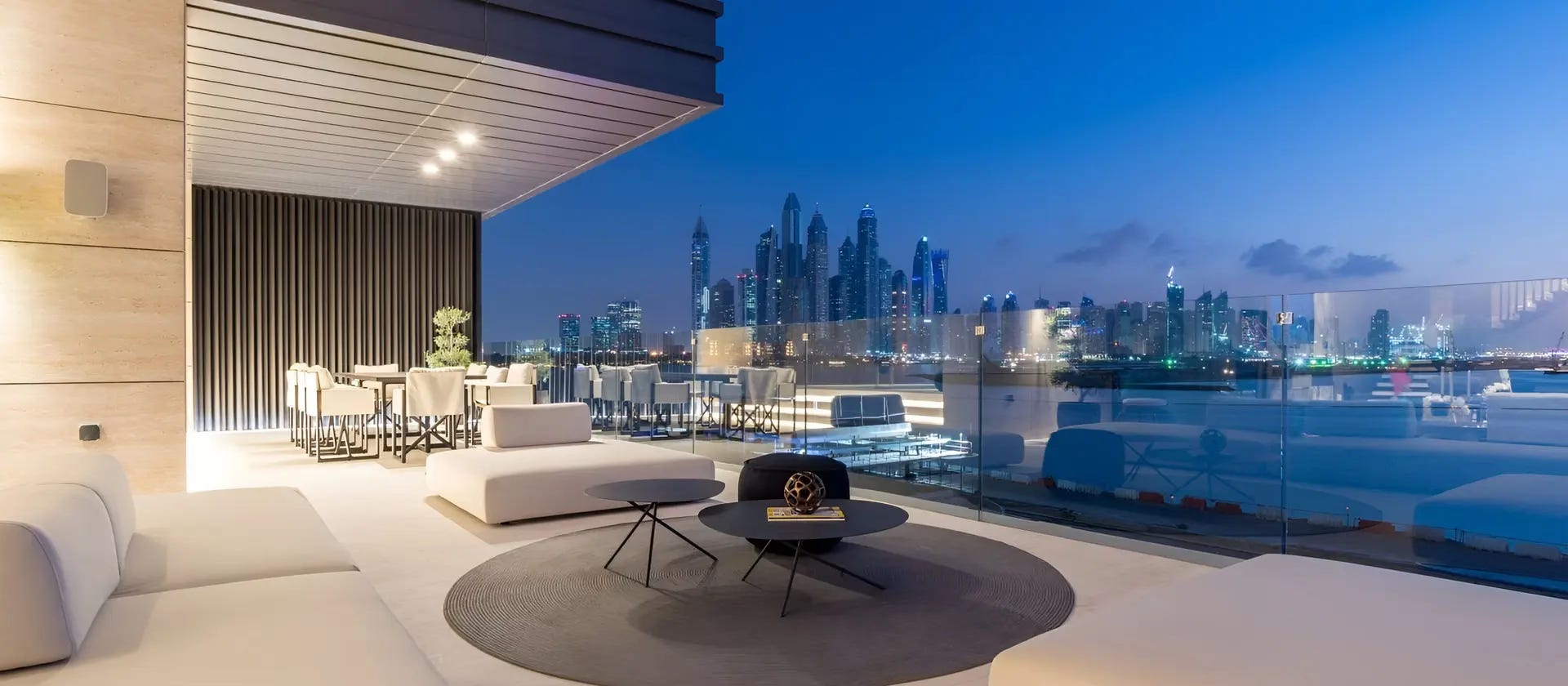
Dubai’s highest penthouses are designed to feel like private, five-star environments in the sky: expansive open-plan rooms, floor-to-ceiling glazing, and materials that catch rather than merely reflect light. A useful way to decode the “glamour” is to separate it into a repeatable system: a disciplined materials palette (stone + warm metal + high-sheen surfaces + tactile textiles + layered glass), a colour strategy that stays calm in harsh daylight, lighting that shifts like a cinematic set, and furniture planning that protects the view and circulation above all else. Dubai penthouse design are often marketed around height, daylight and panoramic sea/city views, and it’s common for them to feature floor-to-ceiling windows—so styling choices must actively manage glare, heat, and privacy without destroying the sense of openness.
This blog post translates those penthouse principles into practical moves you can apply in non-penthouse homes: one “hero” slab or stone-look surface instead of marble everywhere; choosing the right brass finish so it ages gracefully; using lacquer tactically (because it’s photogenic but unforgiving); protecting silks and artwork from cumulative light damage; zoning open-plan rooms with “islands” and clear sightlines; layering window treatments and automating the hard-to-reach windows; and curating accessories with a strict edit so each object reads intentional.
You’ll also find a clear, priority-first approach to luxury smart-home integration (lighting + shading scenes first), a sourcing roadmap (Dubai showrooms, global luxury brands, and local artisan pathways), indicative Dubai-relevant cost ranges (explicitly marked as indicative and based on trade guides and supplier estimates), sustainability checkpoints (FSC, GREENGUARD, EU Ecolabel), and staging guidance for interiors photography.
Assumptions and what “highest penthouse styling” optimises for
Because you haven’t supplied a floor plan, room list, ceiling heights, budget, or photos, this article assumes a “typical” Dubai high-rise penthouse condition: large open-plan living/dining areas, generous glazing with skyline/sea views, and multiple functions (living, entertaining, working, gym/SPA zones) happening in one home. It also assumes the view is a primary asset, which is consistent with how Dubai penthouses are commonly described and marketed (high floors, floor-to-ceiling windows, panoramic views).
Budget is assumed to be flexible but not unlimited; where costs are discussed, figures are explicitly marked indicative and tied to a cited source type such as a trade guide or supplier estimate. For readers in standard homes, the goal is not to copy penthouse scale but to copy penthouse hierarchy: fewer materials, repeated details, cleaner sightlines, and lighting that flatters people and surfaces at night.
Finally, no penthouse images are provided; the photography section therefore focuses on what to commission and where to license images ethically (prioritising Getty Images and Adobe Stock, plus designer portfolio imagery where permitted).
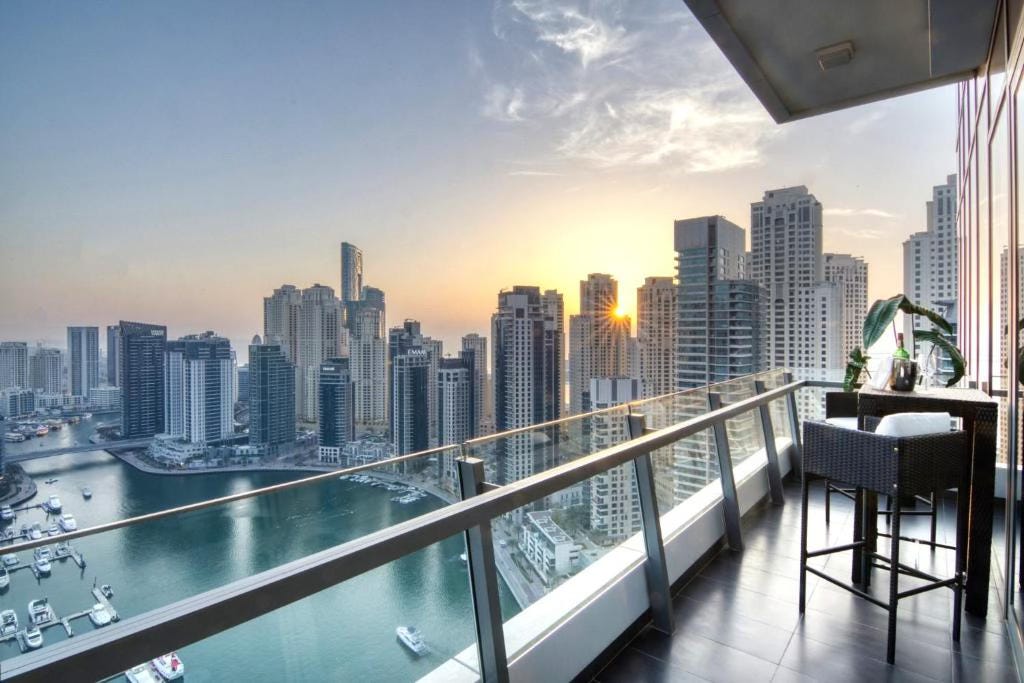
Signature materials and finishes
The fastest way to make a room look “Dubai penthouse” is not adding more décor; it’s tightening the materials language. The most convincing luxury interiors repeat a small number of finishes across the home so everything reads like a designed collection rather than a set of purchases. Regionally, design media and designer commentary also show that surface choices are evolving: large-format engineered slabs and high-performance materials are increasingly favoured because they deliver impact while meeting durability and longevity expectations.
Marble (and marble-look surfaces)
Typical penthouse uses: monolithic entrance moments, full-height feature walls, waterfall islands, bar backs, and bookmatched panels. Marble’s visual power comes from scale and movement (veining); the “luxury read” is strongest when one statement surface dominates rather than several smaller accents.
Visual effect: marble amplifies light and creates a sense of permanence. Polished marble reads formal and glamorous; honed marble reads calmer and more contemporary, often better in sunlit spaces because it softens glare.
Maintenance reality: natural stone care starts with knowing the stone type and using appropriate cleaning products; stone care guidance emphasises that understanding composition affects what cleaners you should use and how to care for the surface. Marble (especially calcareous stones) can etch with acids and needs thoughtful daily habits. Consumer maintenance guidance commonly recommends resealing marble countertops every six to twelve months (usage dependent), and avoiding harsh or acidic cleaners to reduce damage.
Lower-cost / lower-maintenance alternatives:
If you want the marble effect without constant vigilance, use large-format porcelain/sintered stone slabs (the look is dramatic, the upkeep is typically easier). A practical compromise is to put true stone only where it’s touched less (a fireplace wall, a bar face) and use stone-look on the kitchen worktop. For a smaller home, apply a “one hero stone” rule: one slab-like moment (console top, coffee table, splashback panel), repeated with smaller echoes (tray, side table).
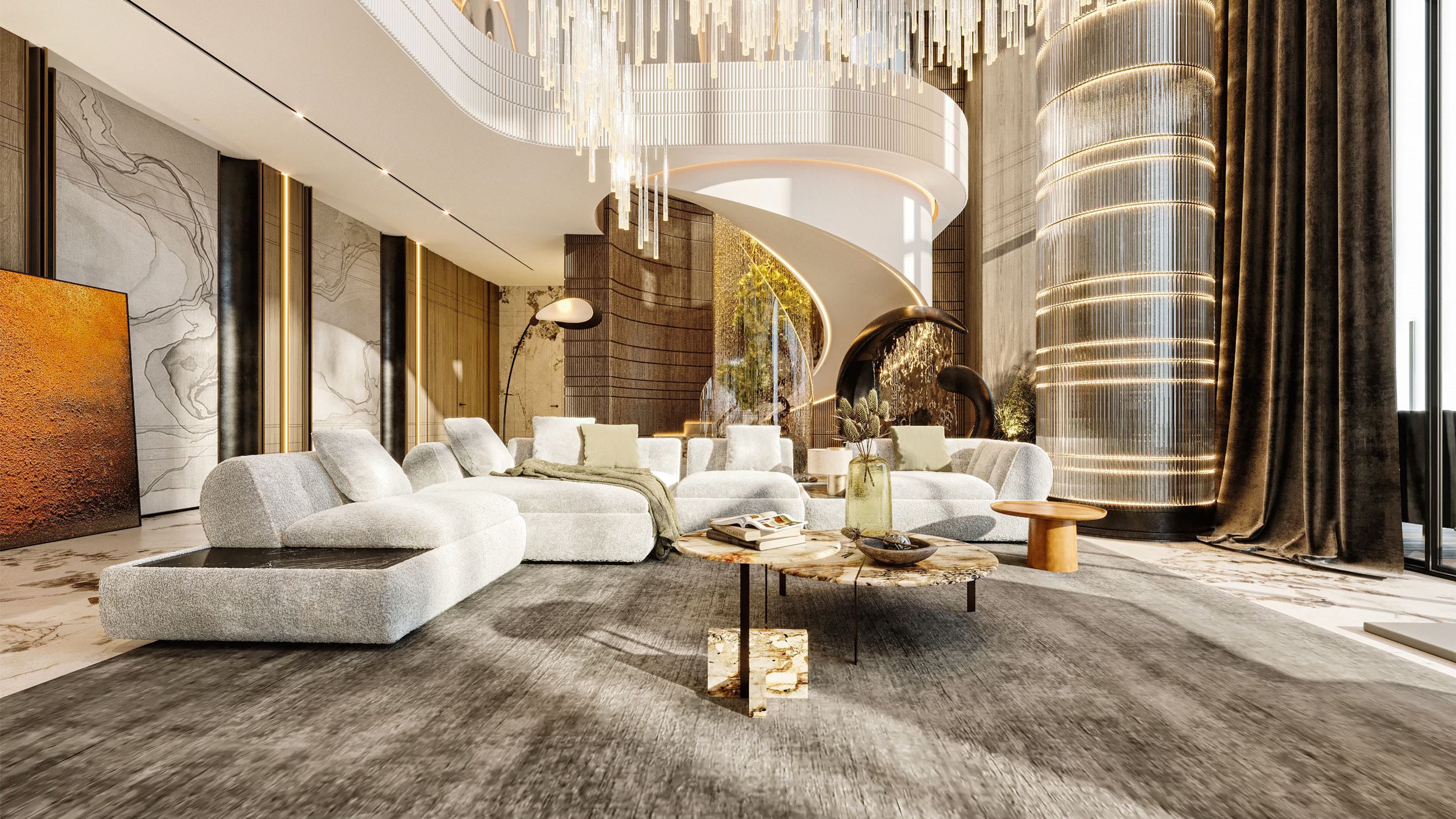
Actionable non-penthouse tip: choose one statement stone and one supporting neutral (e.g., warm white + grey-veined slab). Then repeat the same stone again in a small way (a side table, a shelf). That repetition—more than the stone itself—creates the penthouse design project for sense of intentionality.
Brass (and warm metallics)
Typical penthouse uses: taps, handles, trims, cabinet inlays, lighting, picture lights, and occasional statement furniture details. Brass is a classic Dubai glamour move because it warms up cool stones and neutral palettes.
Visual effect: brass brings “jewellery light”—small highlights that sparkle in evening scenes. Brushed or satin brass reads quieter and more contemporary; polished brass reads more conspicuous and reflective.
Maintenance reality: first decide whether you want the metal to stay consistent or age. Brass finish advice makes a clear distinction: lacquered brass has a protective coating designed to preserve a consistent look but can be stressed by humidity, temperature changes, and cleaning products; unlacquered brass continues to oxidise and develop patina, which can make it more forgiving because you’re working with the metal itself rather than a coating. Brass cleaning guidance also notes tarnish occurs naturally through exposure to oxygen and skin oils—meaning high-touch areas will change fastest.
Lower-cost / lower-maintenance alternatives:
If you like warmth but not upkeep, consider coated or PVD-finished “brass tone” hardware (often more stable). If budget is tight, concentrate brass in a few repeated touchpoints, such as door handles + kitchen pulls + two lamps, instead of scattering single brass accents everywhere.
Actionable non-penthouse tip: pick one brass “temperature” (yellow brass, champagne, or rose/bronze tone). Commit to it across the whole home; mixed warm metals quickly look accidental unless expertly planned.
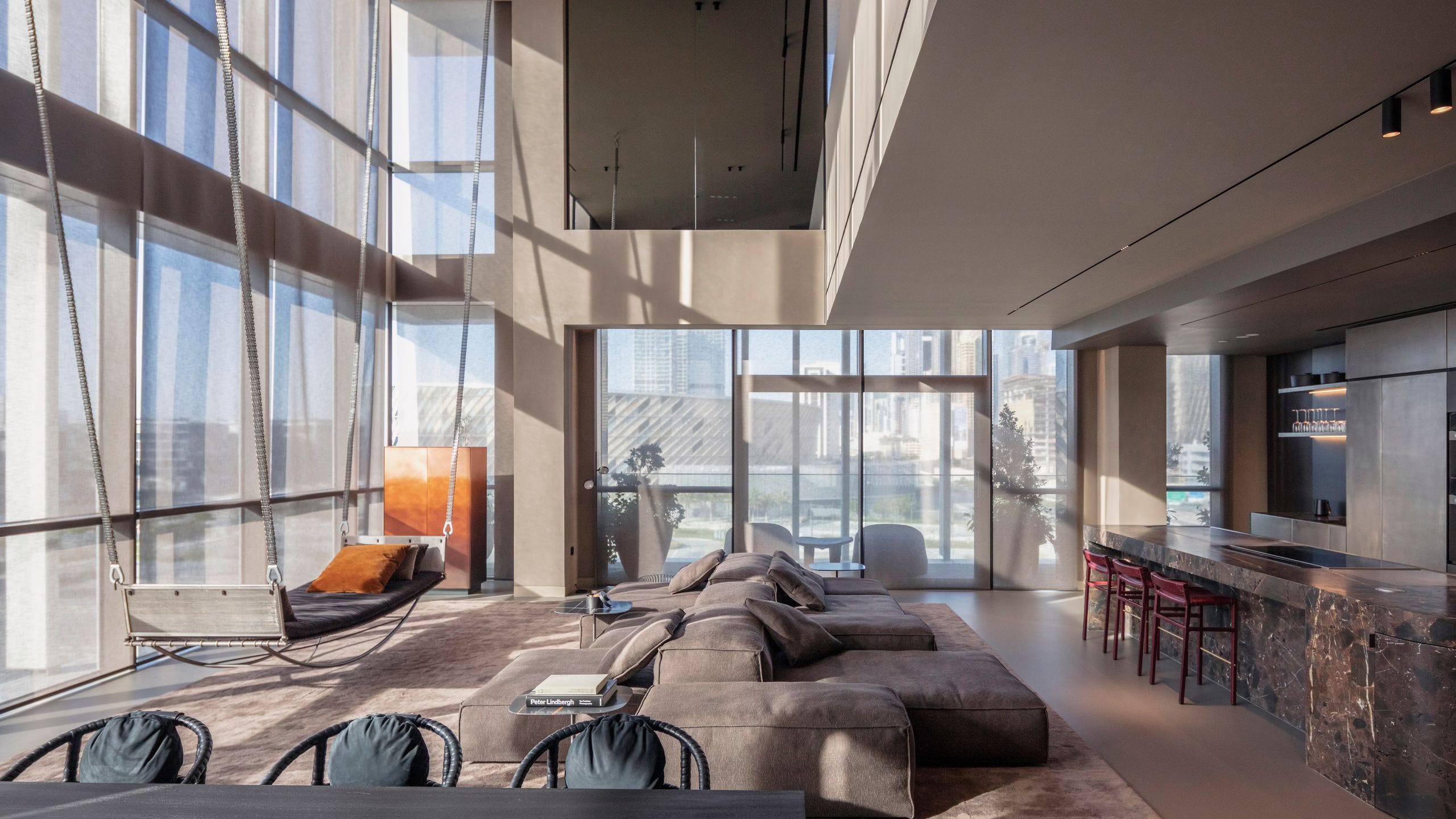
Lacquer (high-gloss joinery, piano finishes, lacquered furniture)
Typical penthouse uses: media walls, bars, dressing rooms, feature cabinetry, and sleek credenzas—usually in deep neutrals (espresso, black, oxblood) or warm creams.
Visual effect: lacquer creates a mirror-like sheen that photographs beautifully at night; it doubles light points and makes a room read “polished” and deliberate.
Maintenance reality: lacquer/high-gloss finishes are durable when properly coated, but they show fingerprints and scratches. Care guidance recommends gentle dusting and wiping with a damp cloth, drying with a soft cloth to remove finger marks, and avoiding abrasive cleaners that can scratch. It also warns that lacquered/high-gloss finishes can shift colour if continually exposed to light—an important note in sun-heavy rooms.
Lower-cost / lower-maintenance alternatives:
Satin lacquer, quality laminates, or “super-matt” anti-fingerprint finishes can deliver the sleek look with less daily wiping. You can also localise lacquer: one lacquered bar cabinet or one glossy niche back rather than a whole wall.
Indicative cost signal (finish only): UK spray-finishing price guides list high-gloss PU finishing around £119.99 per m² (plus preparation) and clear matt/satin lacquer around £35 per m². Converting using early-March 2026 GBP→AED rates (average ~4.91 AED per £ in March 2026), that’s roughly AED ~590/m² for high-gloss and AED ~170/m² for matt/satin lacquer—indicative only, and excluding substrate, fabrication, and installation.
Actionable non-penthouse tip: if you want the lacquer look without the headache, use gloss only on vertical surfaces (cabinet fronts, bar panels), and keep horizontal work surfaces satin or stone-look to reduce visible wear.
Silk (drapery, cushions, wall panels, trims)
Typical penthouse uses: full-height curtains with rich folds, couture-like cushions, upholstered headboards, and sometimes walling in private areas (bedrooms, dressing rooms). Silk is used because it has depth and “liquid” light.
Visual effect: silk shifts tone with movement and changes in daylight, adding a high-end softness that looks particularly luxurious in evening lighting.
Maintenance reality: silk and dyed textiles are vulnerable to light. Museum conservation guidance is explicit: light damage is cumulative, textiles should be kept out of direct daylight where possible, and UV protection measures (UV absorbers, laminates, acrylics) can reduce UV radiation. In a domestic setting, this translates to: silk needs lining/interlining, careful window placement, and a realistic expectation of fading risk in high-sun rooms.
Lower-cost / lower-maintenance alternatives:
Use silk blends, high-performance weaves with a silk-like sheen, or textured linens for the same softness. In a smaller home, reserve true silk for low-sun locations (bedroom cushions, a headboard) and use hardwearing fabrics where sunlight is intense.
Actionable non-penthouse tip: if you already own silk curtains, treat shading as maintenance: sheers or blinds can protect silk during peak sun hours, extending its life.
Glass (clear, smoked, fluted, mirrored, solar-control glazing)
Typical penthouse uses: balustrades, partitions (to zone without blocking light), doors, display shelving, and layered glazing treatments that manage glare while preserving views.
Visual effect: glass keeps sightlines “infinite,” which is crucial in high-floor homes where the view is part of the interior. Fluted or reeded glass adds glamour through texture and soft privacy.
Comfort and energy performance: solar-control glass is designed to reduce solar heat gain while still delivering high levels of natural light—exactly the comfort problem you face in a glazed, sunlit residence. More broadly, building guidance notes that high-performance glazing systems (specialised coatings, insulating gas, improved frames) can cut energy consumption and improve comfort.
Indicative cost signals (UAE supplier estimates): glass partition supplier estimates in the UAE commonly cite broad ranges such as AED 350–1,400 per m² (plus installation often quoted separately). These figures vary by thickness, hardware, acoustic requirements, and custom detailing—treat as indicative only.
Lower-cost / lower-maintenance alternatives:
Fluted window films, reeded acrylic panels, or glass-look polycarbonate can deliver the diffusion effect with less cost. For small homes, one reeded-glass cabinet door or a fluted film on a bathroom window can bring the penthouse texture without structural work.
Actionable non-penthouse tip: use glass as a divider without bulk: a slim framed glass screen can separate a desk zone from a lounge without shrinking the room.
Colour palettes and lighting strategies
Dubai penthouse interior design colour is less about “trend colours” and more about controlling reflection, glare, and mood. In high-glazing spaces, saturated paint can feel overwhelming in daylight, but too much white can look flat. The solution is a palette with calm daylight behaviour and rich night-time response.
Palette formulas that read “penth house” (and work in normal homes)
Use these as ratios rather than strict rules:
The stone-and-metal neutral:
70% warm off-white/stone + 20% greige/taupe + 10% warm metal and black accents. This works because warm whites flatter brass and marble simultaneously, while black adds definition (frames, edging, plinths).
The “hotel evening” palette:
60% soft neutral + 25% deep tone (espresso, charcoal, ink) + 10% warm metal + 5% muted colour (olive, aubergine, clay). Deep tones are best placed on joinery, rugs, or upholstery—not on every wall—so daylight still feels airy.
The sunset-echo palette:
70% sand/ivory + 20% warm grey + 10% copper/rose-bronze notes. This “warm neutral with metal glow” approach is particularly flattering in evening scenes.
Actionable non-penthouse tip: pick one “undertone family” and stay consistent. If your main neutral is warm, keep woods warm and metals warm; if your neutral is cool, keep metals cooler. Consistency reads expensive.
Lighting strategy: layer like hospitality, then automate the mood
Luxury lighting has three layers: ambient (overall), task (work), accent (drama). Smart-home control then turns those layers into “scenes” rather than switches.
A sustainable, comfort-driven reason for lighting and automation is also documented in building automation guidance: the demand for comfort and versatile management of lighting/heating is rising, and efficient energy use is increasingly important—automation exists to coordinate this intelligently.
Layering approaches that deliver penthouse glamour
Ambient: cove lighting, perimeter downlights on dimmers, or concealed LED to give an even glow and reduce harsh ceiling hotspots.
Task: dedicated light for kitchen worktops, reading, desks, and vanity areas.
Accent: wall washers for art, shelf lighting, picture lights, and low-level lighting to create depth.
Simple smart lighting scene examples
Morning (clean daylight): sheers open, minimal warm lighting at low level, task lights off.
Evening entertaining: ambient low, accent lights on art/stone, dining pendant at 40–60%, bar backlighting on.
Cinema: all lighting off except floor-level pathway lights; shades closed.
Night safety: subtle corridor and bathroom toe-kick lights only, triggered by motion.
Lutron’s luxury positioning frames the “complete luxury home automation experience” as combining HomeWorks lighting control with automated blinds and advanced lighting solutions—exactly the mix needed to make these scenes feel effortless.
Actionable non-penthouse tip: if you do nothing else, put all living-room lights on dimmers and add one accent layer (a picture light or shelf LED). Glamour is mostly dimming and layering, not buying expensive fixtures.
Furniture selection and layout for large open-plan penthouse spaces
Open-plan penthouse rooms fail when they’re furnished like standard apartments: too many small items, no hierarchy, blocked sightlines. Successful penthouse planning treats furniture like “architecture”—it builds zones and circulation paths, protecting the view as a primary feature.
Dubai penthouses are often described as having floor-to-ceiling windows and spectacular views—meaning your layout should keep the lowest visual line near glazing and avoid tall obstructions where people naturally look out.
Zoning: create “room islands”
Instead of one giant space, create distinct islands: a main lounge, a dining zone, a bar/reading nook, and a media corner. Each island gets:
a rug (even if subtle),
a lighting identity (pendant or cluster, plus a lamp),
one anchor piece (sofa, dining table, statement chair).
Scale rules that translate to smaller homes
Go fewer, bigger: one substantial sofa looks more luxurious than two small ones fighting for attention.
Use negative space: leave “breathing room” around key pieces; it reads premium because it suggests space is not scarce.
Anchor with a large rug: the rug’s job is to visually “claim territory” inside an open plan.
Circulation: plan the invisible pathways first
Before you place furniture, decide where people walk: from entry to view, from kitchen to dining, from lounge to terrace, from bedroom corridor to powder room. Then keep those routes clear. In smaller homes, this is even more important: a clear pathway makes the room feel larger and calmer.
The view as the feature wall
Keep low seating near the glazing (bench seating, low back chairs).
Place taller storage or art walls on interior partitions, not at the window line.
Angle seating slightly towards the view to make it feel intentional and cinematic.
Actionable non-penthouse tip: in a normal living room, you can copy the penthouse “island” concept by floating the sofa slightly off the wall and adding a slim console behind it. That also creates a natural styling surface for one sculptural lamp and one art book stack.
Window treatments and views management
If a penthouse is “built on the view,” then window treatments are not decoration—they are comfort engineering. In Dubai’s bright conditions, the goal is to keep the room luminous while controlling heat, glare, privacy and fading.
Layering: the penthouse baseline
Day layer: sheer or light-filtering treatment for privacy without killing the view.
Night layer: lined drapery or blackout in bedrooms/media rooms.
Optional third layer: a discreet blind (roller/screen) for peak sun hours.
This approach aligns with conservation guidance for textiles and interiors: daylight is difficult to control and fluctuates; UV protection measures can reduce damage, and textiles should be kept out of direct daylight when possible because light damage is cumulative.
Motorisation: when it becomes “necessary luxury” Motorised blinds/curtains are especially valuable when glazing is large, high, or frequent. Motorisation also enables true lighting scenes: “Cinema” can mean shades down + lights dimmed in one action. Home automation positioning from systems brands explicitly includes orchestrating lighting and shading as part of the smart-home experience.
Indicative cost signal (Dubai supplier estimate): one Dubai supplier estimate lists motorised curtains around AED 180–350 per m² depending on motor type and smart integration—indicative only and dependent on fabric, track, access, and controls.
Solar-control glass and comfort strategies If you are renovating or specifying glazing, solar-control glass is engineered to reduce solar heat gain while keeping high natural light—helpful for comfort and screen glare management. Building guidance also notes high-performance glazing systems can improve comfort and reduce energy consumption.
Actionable non-penthouse options
Use UV-filtering window films or solar blinds in the sunniest rooms to protect textiles and art.
Combine a simple roller blind with curtains to get the layered, hotel-like look without heavy spend.
If you can motorise only one window, choose the most “dramatic” one (largest living-room glazing) for maximum lifestyle effect.
Art and accessory curation, plus bespoke joinery and built-ins
Art and accessories: glamour comes from editing
In penthouse or home styling, accessories are not clutter; they are punctuation. The rule is: fewer objects, better placed, with more negative space around each piece.
Scale and placement rules
Choose larger art than you think you need; small frames often look timid on large walls.
Hang art based on where you stand and sit, not just “eye level.” In lounges, art can sit slightly lower to connect to seating.
Use accent lighting to give art presence at night (picture lights or wall washers), which reinforces a gallery feeling.
Accessory styling techniques that read luxury
Three-height composition: one tall piece (vase/branch), one medium sculptural, one low (tray/books).
Material echo: repeat your key materials (stone, metal, glass) in small doses so the room feels cohesive.
One hero object per surface: coffee table, console, dining centre—each gets one “hero moment,” not many mini-moments.
Actionable non-penthouse tip: instead of buying more décor, remove 30% of what you have on display. Luxury is often subtraction.
Bespoke joinery and built-ins: the “developer show-suite” effect without copying it
Bespoke joinery is one of the strongest penthouse signals because it makes a home feel permanently tailored. The key is not just “custom cabinets,” but repeated motifs and detailing.
Repeated motifs to choose from (pick one and repeat)
A consistent brass shadow-gap or trim line
Fluted/reeded door panels (timber or glass)
A consistent reveal dimension between doors/drawers
One signature stone used as a niche back or plinth
A repeated curve language (arched niches, rounded corners)
Sample specification notes you can request (plain-English, practical)
Cabinet carcases in moisture-resistant board or quality plywood (especially near kitchens/bathrooms)
Veneer or lacquer finish schedule, with sheen levels consistent across rooms
Soft-close hinges and drawers (and spare parts availability)
Integrated LED strips in aluminium channels with diffusers (to avoid “dotting”)
Ventilation allowances for AV cabinets
Touch-latch doors only where fingerprints are manageable; use handles in high-touch zones
Removable access panels for smart-home drivers, routers, and power supplies
Low-emission finishes and healthier interiors If you are redoing joinery or repainting, sustainability and wellbeing are not “extras”—they are part of luxury. EU Ecolabel criteria for paints and varnishes are designed to ensure reduced hazardous substances and reduced VOCs for certified products. For furnishings and materials, UL GREENGUARD Certification is positioned as verifying low chemical emissions that contribute to healthier indoor air.
How to find artisan capability in Dubai A practical local pathway is Make Works UAE, described as an online directory of manufacturers, fabricators and suppliers used by creatives to connect with producers and makers in the UAE (supported by Dubai Culture).
Actionable non-penthouse tip: you don’t need “built-ins everywhere.” One bespoke moment—like a living-room media wall with integrated shelving and lighting—can upgrade the perception of the whole home.
Smart-home integration, sourcing, budgets, sustainability, and staging for photography
Smart-home integration for luxury living
The secret to “luxury tech” is that it should feel invisible. Start with the integrations that change daily life and ambience most.
How the major systems differ (high-level, practical)
KNX: an established building automation standard focused on comfort and versatile management of systems like heating, lighting and access control, with an energy-efficiency driver.
Lutron (HomeWorks): positioned as a luxury home automation experience built on lighting control and automated blinds, often the backbone for scene-based ambience.
Control4: positioned as whole-home automation and control (lighting, entertainment, security and more), often valued for unifying diverse devices under one interface.
Crestron Home: positioned as orchestrating the home environment across lighting, shading, audio and thermostat (and broader wellness/control themes).
Priority integrations (the penthouse order of operations)
Lighting control (dimming + scenes): the biggest “luxury multiplier.”
Shading control: protects views while managing glare and heat; also protects textiles from cumulative light damage.
Climate integration: comfort and quiet are premium; automate temperatures around occupancy where possible.
AV and audio: keep it discreet—architectural speakers, hidden equipment, clean walls.
Security and access: integrate door/gate events with lighting (arrival scene).
Simple scene examples to brief your integrator
Arrive home: entry lights to 40%, feature niche lights on, shades adjust to privacy level.
Entertain: dining pendant 60%, kitchen task lights 80%, lounge ambient 25%, bar shelf lights on.
Away: all lights off except timed presence, shades cycle lightly, climate set-back.
Actionable non-penthouse tip: even without full automation, you can build “manual scenes” by grouping lamps on smart plugs and using dimmable bulbs—just keep the number of control apps minimal so it stays effortless.
Define outcomes\nView, privacy, entertaining, daily routines
Create a materials + colour kit\nStone, metal, sheen, textiles, glass
Plan space\nZones, circulation, sightlines, key focal points
Design light\nAmbient + task + accent, glare control, dimming
Select FF&E\nHero pieces, correct scale, cohesive finishes
Specify joinery\nMotifs, reveals, lighting, storage, access panels
Integrate smart-home\nScenes, shading, climate, AV priorities
Style + edit\nArt, objects, negative space, final alignment
Stage + shoot\nTest shots, straighten verticals, consistent light
Show code
Sourcing: Dubai showrooms, international brands, and artisan types
The most efficient sourcing strategy is “local for speed, global for hero pieces, artisan for the signature details.”
International luxury brands to consider (official brand sites) If you want the “penthouse look,” prioritise brands with strong material programmes (leathers, woods, metals) and custom sizing. A practical way to navigate multi-brand access in Dubai is via established luxury retailers and design destinations.(For specific international brands, use official store locators to confirm UAE availability and authorised dealers.)
Artisan types to shortlist (and where to find them)
Bespoke joinery and architectural woodwork
Stone fabrication and slab selection support
Metalwork (brass trims, custom plinths, stair rails)
Upholstery and soft furnishing ateliers
Glass specialists (fluted glass, partitions, mirrors)
Lighting fabricators for custom chandeliers or feature pendants
Use Make Works UAE to locate manufacturers/fabricators/suppliers open to creative orders: https://dubaiculture.gov.ae/en/about-us/special-projects/our-projects-events/MakeWorksUAE
For broader industry sourcing, Dubai also hosts major interiors marketplaces such as INDEX (industry event platform and supplier access): https://www.indexexhibition.com/
For a good interior design company brand, https://algedra.ae
Budget ranges and cost-saving alternatives
All figures below are indicative and should be verified with your contractor and supplier for your specific scope, access constraints, and specification.
Indicative luxury fit-out bands (trade guide type) A Dubai luxury fit-out cost guide gives a broad indicator that high-end apartments and villas can range around AED 800–1,500 per sq ft, depending on customisation and materials—treat as an order-of-magnitude planning number, not a quote.
Indicative material and feature costs (supplier price list / supplier estimate types)
Marble-look tile/slab products: one Dubai supplier product listing shows AED 175–490 per m² depending on size/finish—useful as a reference band for stone-look surfaces (indicative; specific products vary).
Glass partitions: UAE supplier estimates commonly cite AED 350–1,400 per m² plus installation AED 150–300 per m² (indicative; acoustic and hardware requirements can raise this).
Motorised curtains: one Dubai supplier estimate lists AED 180–350 per m² depending on motor and integration (indicative).
Cost-saving substitutions that still read “penthouse”
Replace full marble with a single stone hero moment + stone-look elsewhere.
Use satin finishes for large joinery areas and reserve high-gloss for a controlled “jewel box” element (bar, niche).
Choose lacquered brass (more consistent) where you want uniformity; choose unlacquered brass only if you genuinely like patina and maintenance reality.
Add texture (rugs, sheers, leather) instead of adding more colours—texture is often a cheaper way to look expensive.
Sustainability considerations
Sustainability in luxury interiors is increasingly about three things: responsible sourcing, low emissions, and comfort efficiency.
Responsible materials certifications
FSC: FSC’s furniture guidance frames certification as supporting long-term sources of wood and other forest-based products, aligning with demand for sustainable furniture supply chains.
GREENGUARD (UL): UL describes GREENGUARD Certification as helping manufacturers market products with low chemical emissions that contribute to healthier indoor air.
EU Ecolabel (paints/varnishes): EU guidance states criteria for certified paints/varnishes include reduced hazardous substances and reduced VOCs.
Energy and comfort moves that fit a glazed, high-floor lifestyle
Specify higher-performance glazing where possible; building guidance notes high-performance windows/glazing can cut energy consumption and improve comfort.
Use solar-control glass or shading strategies in sun-heavy zones to reduce solar heat gain while keeping natural light.
Consider automation as part of sustainability: KNX explicitly links comfort/versatility with the importance of efficient energy use.
Staging tips for photography
Whether you’re shooting for a portfolio, listing, or social media, penthouse-style interiors succeed visually because they’re staged like editorial sets: clean lines, controlled reflections, and lighting balanced for both window views and interior detail.
Core shooting rules
Keep verticals straight: architectural/interior photography guidance calls straight verticals an “absolute must” in most interior shots.
Shoot wider than you think, and prioritise horizontals: pro guidance for “before-and-after” capture (also applicable to “after” styling) recommends wider shots and horizontal orientation because you can crop later but can’t expand a tight frame.
Plan shots as a sequence: move around a room in a semi-circle, capturing multiple points so the layout reads clearly and the space feels “walkable.”
Shot list: image types to commission or source
Wide hero living zone from a corner (shows zoning + view).
Dining zone wide shot with pendant and table styling.
Detail shots: marble/stone veining, brass hardware, lacquer sheen, silk texture, glass ribbing.
Night-time ambience shot: interior lighting + city lights balanced.
One “joinery moment”: bar niche, shelving, or media wall with integrated lighting.
Actionable non-penthouse tip: before you shoot, do a five-minute “reflection audit” at night: turn lights on, walk around with your phone camera, and adjust lamps so you don’t see bare bulbs reflected in lacquer, glass, or marble.
Reader checklist
Choose one hero material (stone or lacquer) and repeat it in at least three places (big + small) for cohesion.
Decide your metal strategy (lacquered vs unlacquered brass) based on how you actually live and clean.
Set up three lighting scenes (Morning / Evening / Entertain) before you buy more décor—dimming and layering create most of the luxury effect.
Layer window treatments (sheer + blackout) and protect textiles from direct daylight where possible; light damage is cumulative.
When photographing, keep verticals straight and shoot wide/horizontal to capture proportion and calm luxury.